


Steve Jobs lived in an almost empty house.
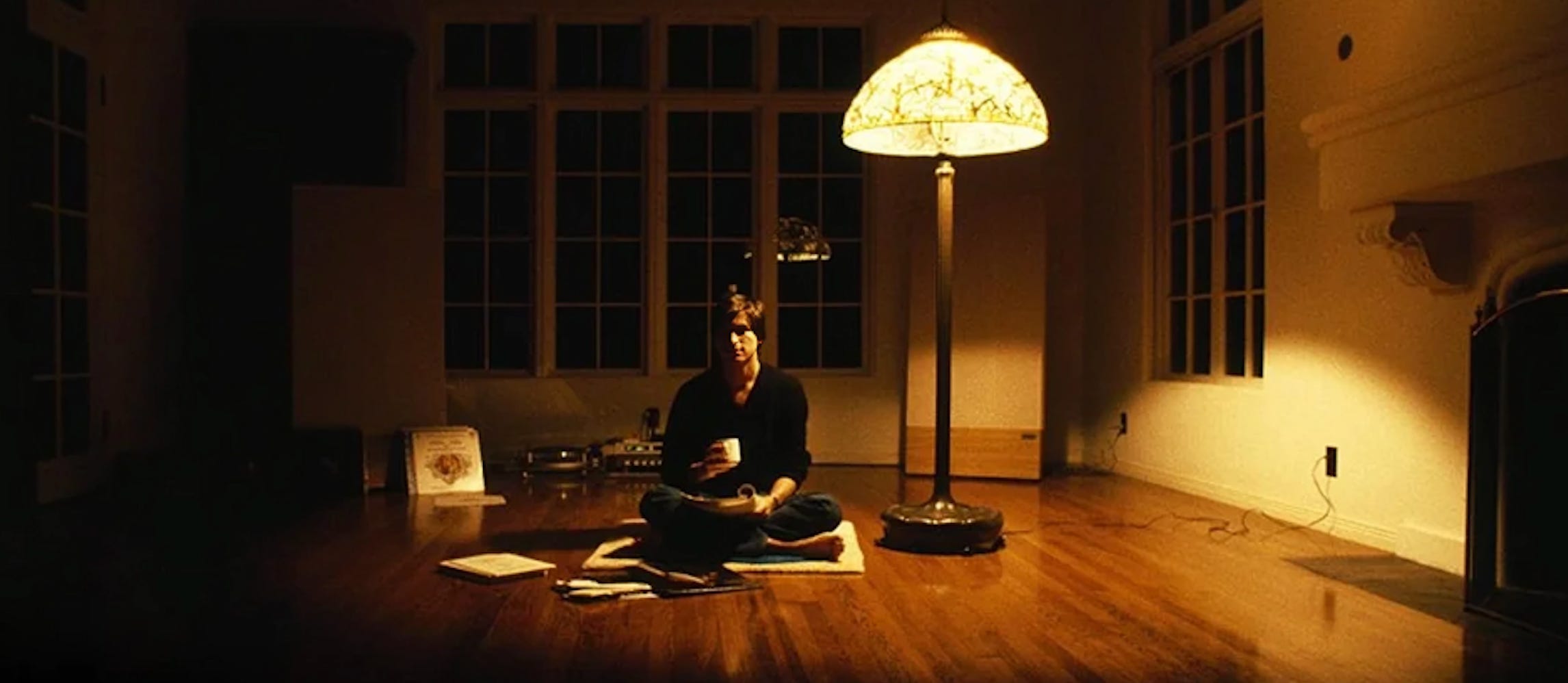
Not because he was broke.
Because he was obsessed with focus.
A chest of drawers. A mattress. A folding table. Folding chairs.
That’s it.
He also wore the same outfit every single day:
Black turtleneck. Jeans. New Balance sneakers.
Why?
Decision fatigue.
Every decision you make drains your mental energy. What to wear. What to eat. Where to put things. Which project to tackle first.
By the end of the day, you have nothing left for the decisions that actually matter.
Jobs understood this.
His minimalist lifestyle wasn’t about aesthetics. It was about preserving his decision-making capacity for building Apple.
And it worked.
Jobs didn’t build Apple by doing more. He built it by doing less—but doing it better than anyone else.
The power of leverage
The word “leverage” comes from the lever—a simple tool that lets you move a massive object with minimal force.
Give me a lever long enough and I can move the world.
In productivity, leverage means getting more output from the same input.
More with less.
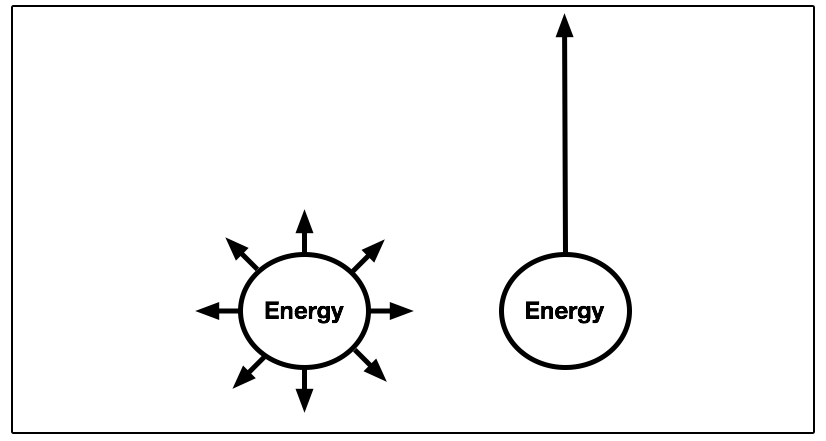
Scenario 1: Arrows pointing in every direction—up, down, left, right, diagonally. Your energy is scattered across a dozen projects, tasks, and priorities.
Result? You move an inch in every direction. Barely any progress.
No leverage.
Scenario 2: One arrow pointing straight up. All your energy focused in ONE direction.
Result? You move a mile forward.
Maximum leverage.
Same amount of energy. Completely different outcomes.
This is the core principle of Essentialism:
Scattered energy = no leverage = scattered results.
Focused energy = maximum leverage = exponential results.
Most people are stuck in Scenario 1. They’re busy. They’re hustling. But they’re not moving forward.
They have zero leverage.
Here’s how to fix it.
Do 1-2 things properly (not 10 things poorly)
Most people spread themselves thin.
They’re working on a dozen projects, chasing every opportunity, saying yes to everything.
And they wonder why nothing moves forward.
Here’s the truth:
Quality results come from fewer tasks with consistent effort—not scattered energy across a dozen projects.
This comes from Greg McKeown’s book Essentialism: The Disciplined Pursuit of Less.
The idea is simple:
Do 1-2 things properly instead of many things half-heartedly.
You make significant progress in what truly matters rather than tiny strides in every direction.
This is how you create leverage: concentrate your force.
Here’s how to apply this:
Select fewer opportunities – You can’t pursue everything. Trying to do too much destroys leverage. Concentrate your energy in one direction.
Prioritize the essential – Determine your purpose before eliminating options. Focus on key tasks and make tough decisions about what matters most.
Clear obstacles – Identify what truly matters and remove any barriers standing in your way.
When you say no to the good, you make room for the great.
That’s leverage.
Elimination over addition
This is where Steve Jobs’ empty house makes sense.
His minimalism wasn’t just a lifestyle choice. It was a philosophy:
Remove anything that clogs or clutters your mind.
Why? Because of decision fatigue.
More things in your environment = more decisions = fewer quality decisions.
This means less productivity. Less efficiency. Lower-quality output.
Less leverage.
You don’t have to live in an empty house. But you can start small:
Simplify your workstation: Minimal desk setup. No clutter.
Organize your desktop: Delete those messy screenshots. Clean it up.
Limit browser tabs to 4: If you have 47 tabs open, you’re not working, you’re drowning.
The goal isn’t to have less for the sake of less.
It’s to channel all your energy into what actually moves the needle.
More with less. That’s leverage.
Remember the diagram:
Scattered arrows = no leverage = scattered results.
One arrow = maximum leverage = exponential progress.
Focus. Clarity. Discipline.
That’s how you produce higher-quality output that compounds over time.
The bottom line
Steve Jobs understood something most people don’t:
Success isn’t about doing more. It’s about eliminating everything that doesn’t matter.
Point all your arrows in one direction. Create leverage.
Do 1-2 things properly. Remove the rest.
Your focus is your most valuable asset. Protect it ruthlessly.
This week, pick one thing to eliminate from your life. One distraction. One project. One commitment.
Make space for what actually matters.
That’s how you get more with less.
P.S. If you want to master this concept, read Essentialism by Greg McKeown. It’s the manual for doing less but better.