


AI tools change every week.
New features. New models. New hype.
But here’s what doesn’t change: human psychology. Marketing fundamentals. The problems your customers actually have.
Most people chase tools. The ones who win build systems.
You can swap out any tool. But if the system is solid, the foundations remain.
I spent 12 months testing this. Here’s what actually matters.
Use AI as a strategic partner
Here’s what I learned after integrating AI fully into my work:
The people who hire you don’t care whether you use AI or not. They just want the outcome.
They don’t have the bandwidth or expertise to do it themselves, even with AI. They need you to do it.
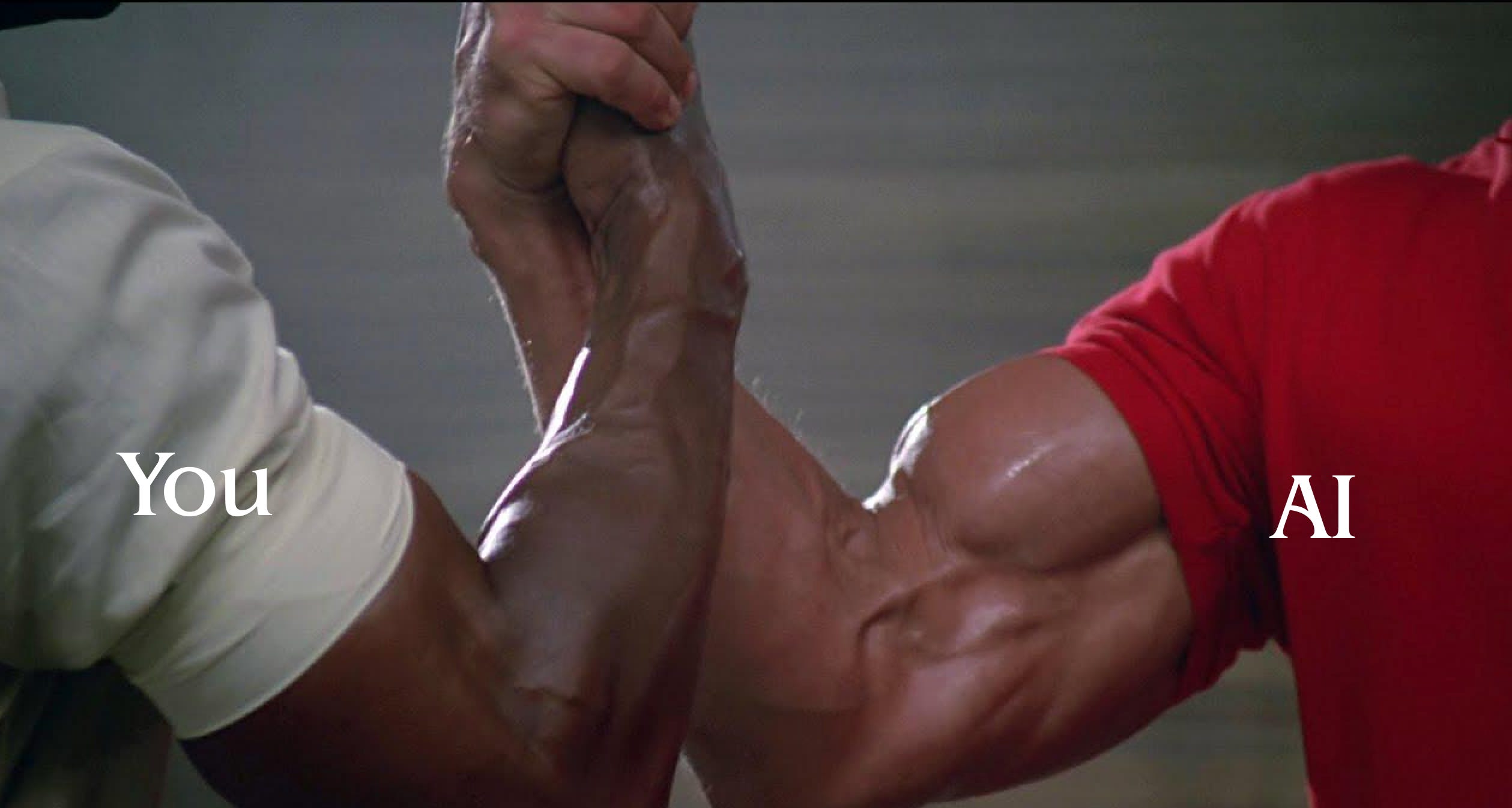
That’s the shift: AI isn’t a replacement. It’s a strategic partner.
You bring the judgment, the taste, the understanding of what works. AI brings speed and scale.
You don’t need to be an AI expert. You need to be the person who solves real problems people are already complaining about.
Here’s how.
Part 1: How to use AI to solve problems (3 steps)
Step 1: Find the work everyone hates
People love to complain. That’s your goldmine.
I started paying attention on Slack, Reddit, X, Instagram. Each complaint became an opportunity.
I’d head to TheresAnAIForThat.com and search for AI tools that solve these exact problems. Test them myself first. When I found something that worked, I’d approach whoever complained.

The key: You’re not hunting for tools. You’re hunting for pain points. Then you map tools to those pain points.
Step 2: Build a prompt library they’ll actually use
I created a prompt library for our team’s most common tasks.
But here’s how I made everyone use it:
Instead of just sending a link, I recorded a 5-minute video showing exactly how to use it and dropped it in our team Slack.
Within a week, everyone was using it.
The key: Don’t just build it. Show people how to use it. Make it impossible to ignore.

To save you time, I spent hours building this library of marketing Promts.
Grab it here
Step 3: Create Custom GPTs
Custom GPTs are like prompts on steroids.
I built one with my manager that transforms anyone’s writing to sound like our company’s messaging and language. Our company’s tone.
Now anyone on the team can write something, run it through the GPT, and it comes out sounding like us.
The key: You’re not just using AI. You’re building AI assistants that solve specific, repeatable problems.
To recap:
Find AI solutions (hunt for pain, not tools)
Build a prompt library (and show people how to use it)
Develop AI assistants (Custom GPTs for repeatable tasks)
That’s how you use AI as a strategic partner to solve real problems.
Part 2: Why systems beat tools (every time)
Here’s the thing: most people collect AI tools.
They chase new software. New features. New updates. Without ever integrating any of it into how they actually work.
That’s why nothing compounds.
You can change a tool, but the system and foundations remain the same.
The fundamentals of marketing, psychology, and philosophy aren’t changing. Human behavior isn’t changing.
What’s changing is the speed at which you can execute on those fundamentals.
That’s where AI comes in.
The power isn’t in the tools. It’s in the systems you build around them.
The people who win with AI aren’t the ones using the most software. They’re the ones building systems that compound over time.
AI tools link lockdown
Below are the exact tools that power my three core AI systems.
System 1: Discovery/research
Prompt Library - Ultra-specific prompts to 10x your creativity. Fill in the placeholders and never need to edit the prompts again.
There’s An AI For That - Map pain points to solutions. I use this after spotting complaints on Slack or Reddit to find tools that actually solve problems.
Grok Alerts - Daily trend radar. Monitors X conversations and sends me a summary of what mattered yesterday. Two minutes keeps me ahead.
NotebookLM - Extract insights from podcasts, books, and videos. Hours of content distilled into minutes. Get the juice faster.
System 2: Visuals
Gamma.app - Turn messy thinking into clean presentations and documents. Removes design friction.
Google Nano Banana-First image generator I trust for real marketing assets. Sharp text, consistent branding, professional visuals. Chat GPT now does it almost as good too.
Fal.ai - Generate brand visuals, thumbnails, and campaign assets at scale. LORA training for repeatable visuals.
System 3: Production and execution
Claude - Claude generates the first pass: structure, rough copy, and initial thinking. Then I make ChatGPT and Claude “fight” each other. I feed the content to ChatGPT for feedback, pass that feedback back to Claude, and ask whether it agrees. Pro tip: always ask Claude to be brutally honest.
Lovable.dev - Build internal tools, prototypes, and landing pages in plain English. Ideas become working products in hours, not weeks.
Final thought
Tools don’t compound. Systems do.
That’s why my 2026 stack is small, intentional, and system-first.
You can swap out any tool in this stack. But the systems remain.
Because the fundamentals don’t change. Human psychology doesn’t change. Marketing principles don’t change.
What changes is how fast you can execute on them.
AI is your strategic partner in that execution. Not a replacement. A multiplier.
If you want leverage, stop adding tools and start locking systems.
Hunt for pain. Build prompts people will actually use. Create AI assistants that solve repeatable problems.